
Firmin Baes
THE LACEMAKER, ca. 1900
pastel on paper laid on canvas
23 3/4 by 35 5/8 in. (63 x 68,5 cm)
Further images


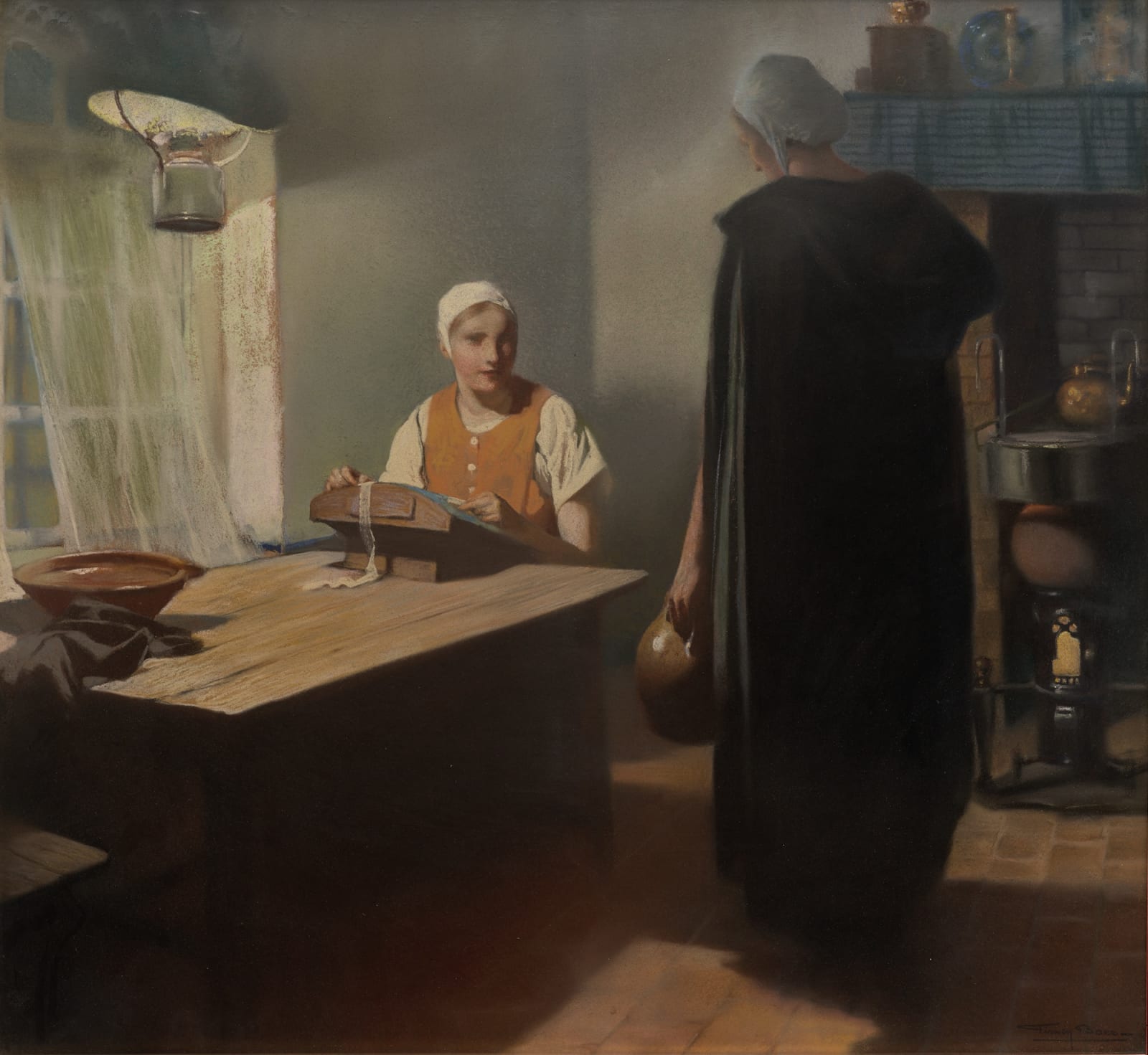
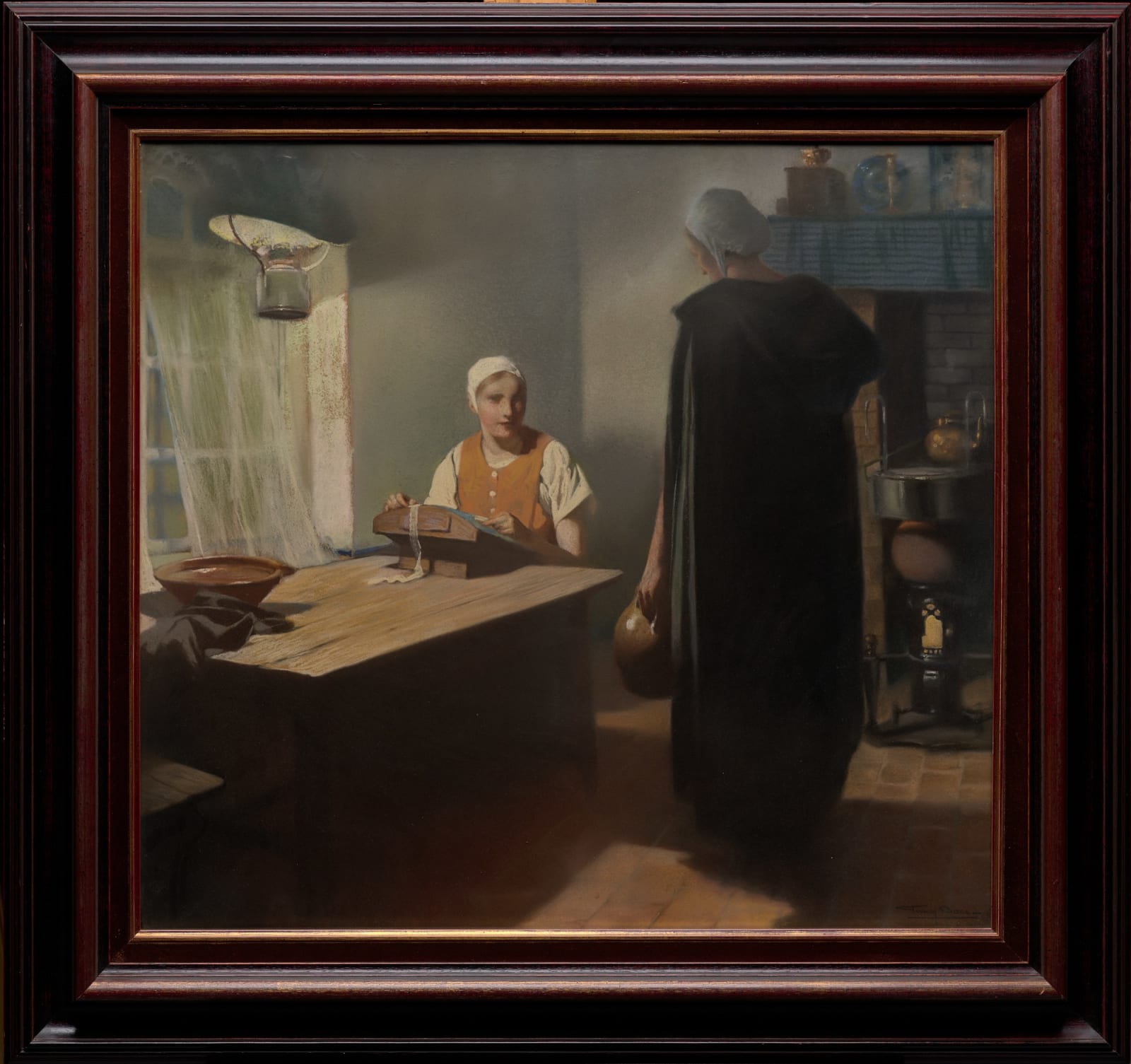
Rendered with Firmin Baes’ signature mastery of the pastel medium, this intimate interior scene captures a quiet yet poignant moment between two women. Set in a modestly lit room, the composition invites the viewer into a suspended moment in time—one defined by atmosphere, gesture, and subtle emotional tension. A seated woman, engaged in the delicate task of lacemaking, looks up from her work, her attention momentarily broken. The single light source, a lamp suspended above the table, casts a soft, warm glow over the scene, gently highlighting the lacemaker’s hands and the fine threads she works with. The other woman, who has just entered the room, is dressed in a large, black cape, her figure almost blending into the shadows cast by the soft lighting, which makes her presence both mysterious and commanding.
Lacemaking, historically a refined and often necessary domestic art, is captured with a sense of composed intimacy. In the hands of Baes, the act is not only a symbol of feminine labor but also an expression of concentrated beauty. This theme, reminiscent of the works of Dutch masters such as Johannes Vermeer (1632-1675), is transformed by Baes’ unique technique. His pastels, unlike the gestural, textured strokes of Edgar Degas (1834-1917) or Léon Lhermitte (1844-1925), seem to dissolve into light. The surface appears velvety and smooth, with colors melting gently into one another—more painting than drawing, more atmosphere than materiality.
Trained by Symbolist master Léon Frédéric (1856–1940) and rooted in a lineage of decorative artisans, Firmin Baes made pastel unmistakably his own. This work—restrained in gesture yet rich in atmosphere—embodies his lifelong effort to distill quiet moments into enduring truths. Through its filtered light and polished surfaces, we glimpse not only Baes’ mastery of technique but also his quiet reverence for the everyday. As throughout his oeuvre, the domestic becomes luminous, the ordinary rendered timeless.
This note was written by Elsa Dikkes.